 Neha Jain
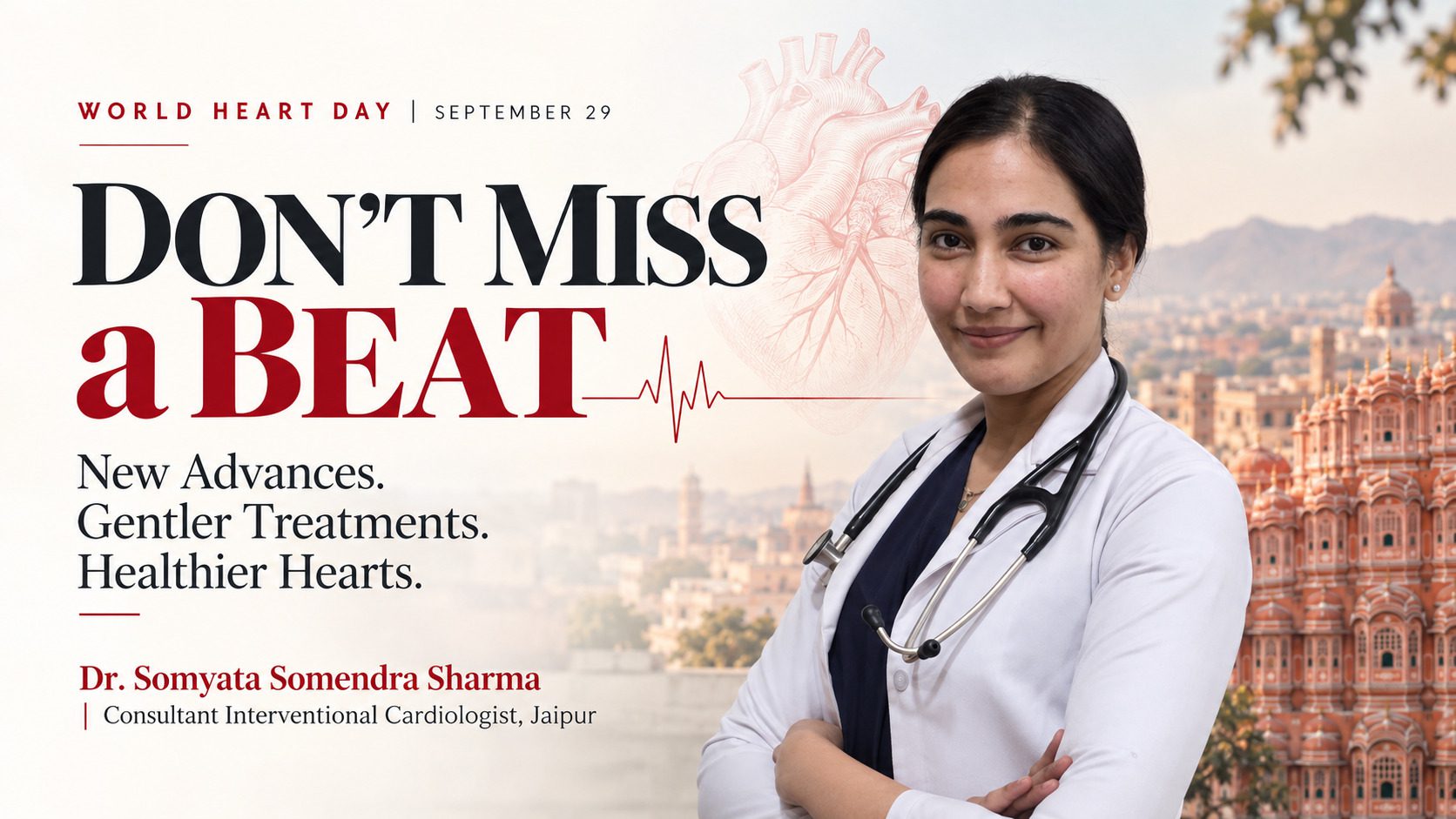
By Dr. Somyata Somendra Sharma, Consultant Interventional Cardiologist, Bombay Hospital Trust, Jaipur
This World Heart Day, Some Good News From Inside the Heart
Every year on September 29, the world pauses for World Heart Day. This year’s message from the World Heart Federation is simple but important: “Don’t Miss a Beat” a gentle reminder that heart disease often hides in plain sight, and that noticing the small warning signs early can make all the difference.
As a cardiologist who spends most days inside the cath lab, threading tiny tubes through blood vessels to reach the heart, I want to share something hopeful with our community this year. The way we treat heart disease has changed enormously quietly, steadily, and for the better. Let me walk you through some of it, in plain language, over a cup of coffee.
From a big operation to a small pinprick
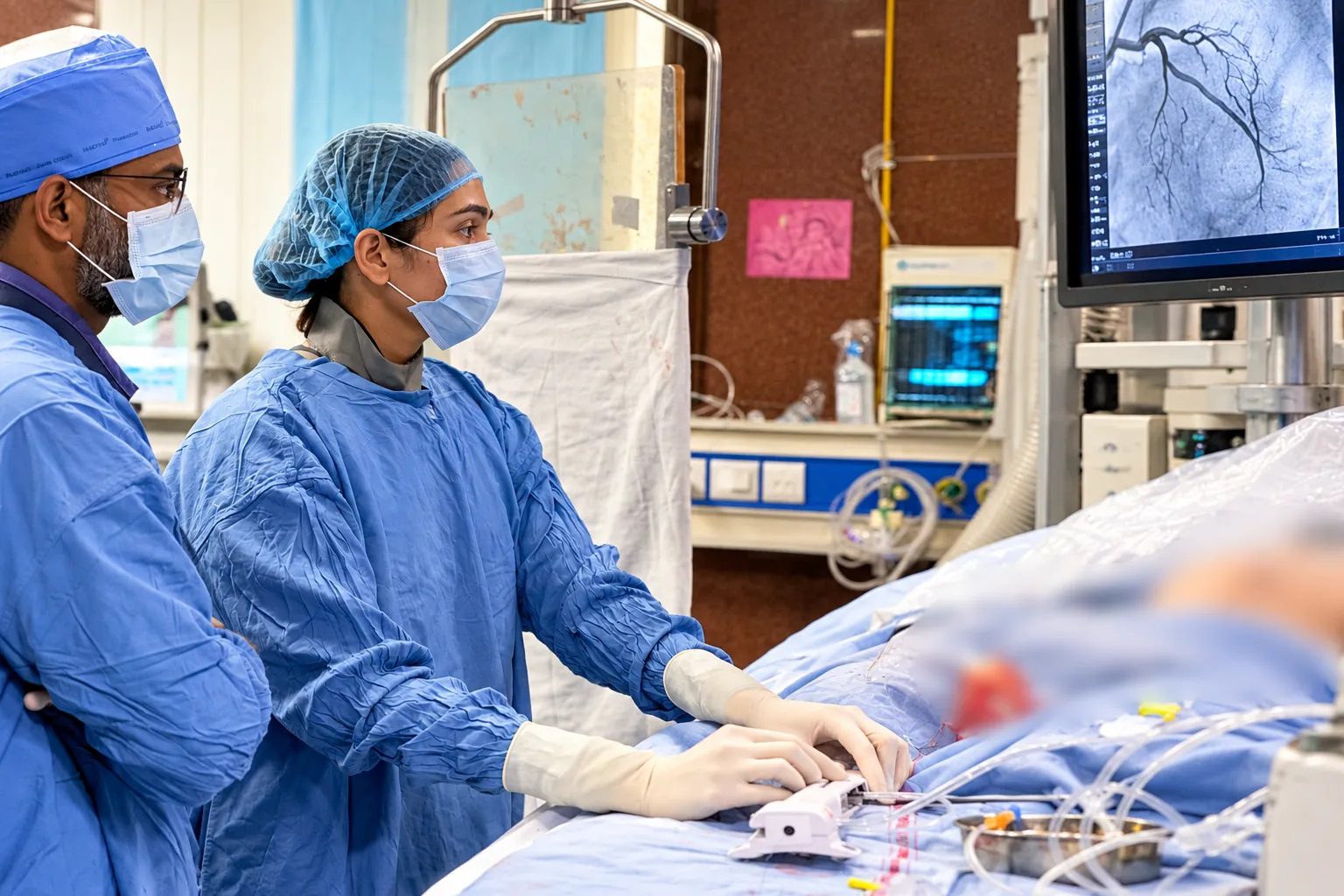
Not too long ago, a blocked artery in the heart usually meant open-heart bypass surgery a big operation, a long scar, and weeks in bed recovering. Today, most blockages are treated through angioplasty: a thin tube is guided through a blood vessel, usually from the wrist, all the way up to the heart, and a tiny mesh tube called a stent gently props the artery open.
The stents themselves keep getting better. Newer ones are thinner, coated with medicine that helps prevent the artery from narrowing again, and re-blockage rates have fallen to under 5% in large studies a remarkable improvement from the stents of even a decade ago. We also now have special imaging tools that let us peek inside the artery wall itself during the procedure, almost like a torch shining inside a pipe, so we can be sure the stent is placed exactly right.
When the heart’s rhythm goes off-beat
Many of you may know someone — a parent, a neighbour, perhaps yourself who deals with an irregular heartbeat, most often a condition called atrial fibrillation. For years, we treated this by carefully burning tiny areas of heart tissue with heat (radiofrequency ablation) to correct the faulty electrical signals. It worked well, but came with a small risk of injuring nearby structures.
In the last two years, a gentler technology called pulsed field ablation has changed this. Instead of heat, it uses carefully targeted electrical pulses that affect only heart muscle cells and spare the surrounding tissue, making the procedure both quicker and safer. Recent trial results are striking — patients treated with this newer method had fewer repeat procedures and better long-term freedom from irregular heartbeat compared to the older heat-based technique. It has moved so quickly from “promising new idea” to “preferred first choice” that specialists now consider it close to a new standard of care.
Pacemakers, too, have shrunk. Some of the newest ones are smaller than a large vitamin capsule and are placed directly inside the heart through a vein in the leg no wires, no chest incision, no visible scar at all.
Living better with a weaker heart
For families dealing with heart failure where the heart struggles to pump as strongly as it should there is genuinely good news too. A group of medicines originally developed for diabetes, called SGLT2 inhibitors, have turned out to help the failing heart significantly, regardless of the type of heart failure a patient has. They are now considered essential, foundational therapy, alongside a few other well-established heart failure medicines.
On the device side, cardiac resynchronization therapy where a special pacemaker helps the two sides of a weak heart beat together in better coordination continues to help many patients feel noticeably less breathless and more capable of daily activities. Newer, leadless versions of this technology are now being tested, aiming to deliver the same benefit without the wires that traditional devices require.
What matters most, beyond the technology
I share all of this not to dazzle you with machines and medicines, but to reassure you: if you or someone you love ever needs treatment for a heart problem, care today is gentler, safer, and more effective than it has ever been.
But here is the truth no technology can replace noticing the signs early. Unexplained breathlessness, chest discomfort, palpitations, or unusual fatigue should never be brushed aside as “just tiredness” or “just age.” That is exactly the spirit behind this year’s World Heart Day theme.
So this September 29, take a moment for your heart. Get your blood pressure checked. Ask about your cholesterol. And if something feels off, don’t wait it out come talk to us. Don’t miss a beat.
Happy World Heart Day!
